
The 5% Pledge: Supporting Minnesota’s Lakes, Forests, and Wildlife
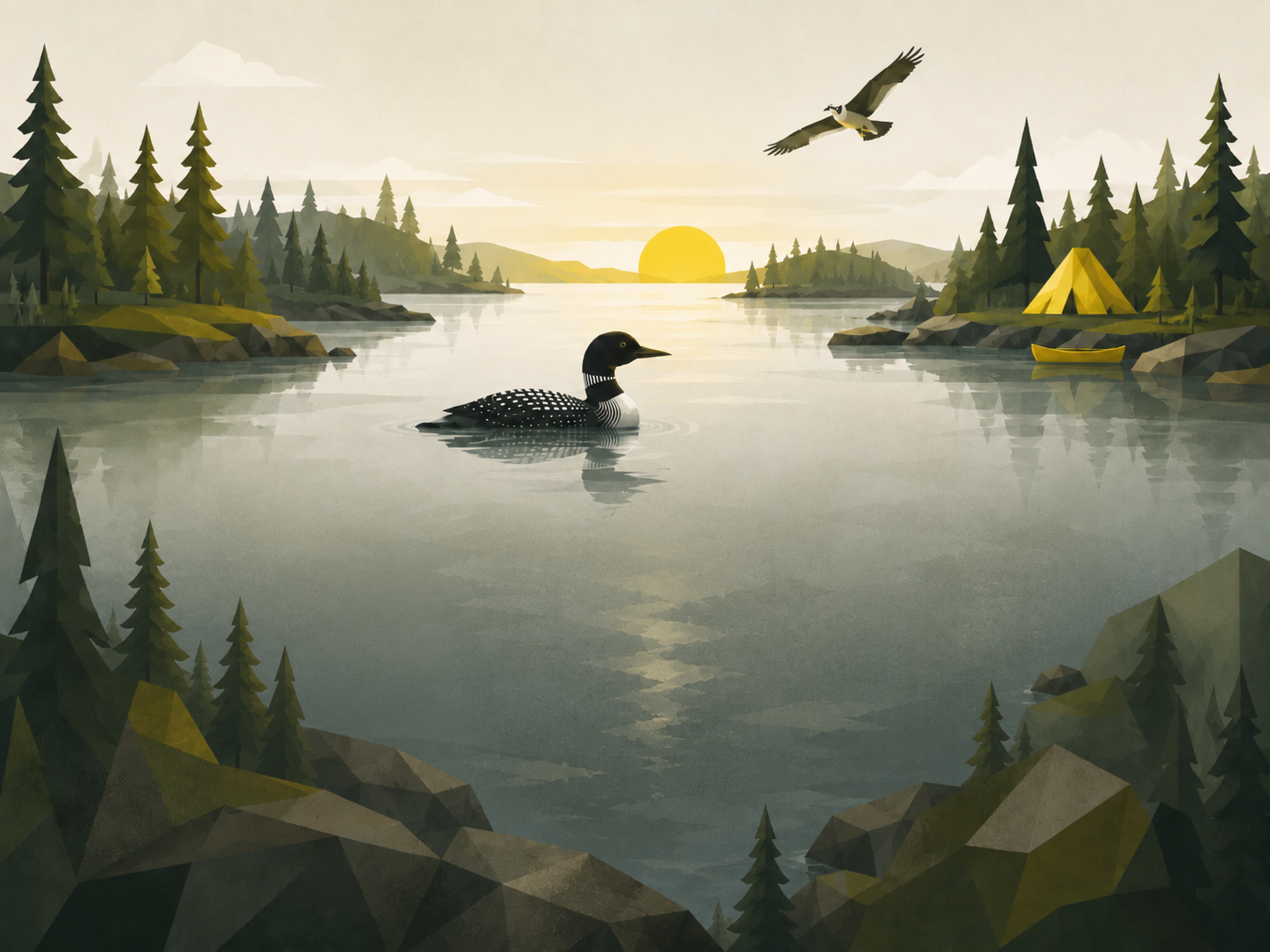
Starting today, 5% of every invoice The Osprey sends will be donated to a Minnesota conservation or wildlife organization. The client picks where it goes. The receipt is shared with them when the project closes out.
It's not a marketing line. It's the most direct way I know to tie what I do for a living to the places I want to see still standing in twenty years.
How it works
When we kick off a project, the client picks one of the organizations below — or splits the donation evenly across all five. When the final invoice is paid, I send the donation and forward the confirmation. No paperwork on their end, no extra cost, no opt-in fee. The 5% comes out of my margin, not theirs.
No minimum project size. The pledge applies to every engagement.
The five organizations
I picked these specifically. They're all Minnesota-rooted, they all do real on-the-ground work, and they each protect a different piece of what makes this state worth living in.
National Loon Center
This one is personal. My grandfather, Norman J. Walz, served in the Minnesota State Senate and co-wrote the bill that made the loon Minnesota's state bird. I never met him — he passed before I was born — so everything I know about him I know secondhand. My dad was the youngest by fifteen-plus years and got all the stories.
The way Dad told it, Grandpa Norman was the kind of guy who'd visit his elementary school to talk about Senate work and conservation. Navy veteran. Liked his toast burnt. An honorable man who showed up.
The National Loon Center in Crosslake works on loon habitat protection, water-quality research, and public education about the bird and the lakes it depends on. Audubon's modeling projects the common loon could lose 56% of its breeding range by 2080 under current emissions trajectories. If a kid in Bemidji is still going to learn the loon's call in third grade, organizations like this are the reason.
Boundary Waters Canoe Area
A million acres of lakes and forest with no motors, no permanent structures, and roughly zero ways to ruin it short of mining the watershed upstream. Donations help the BWCA stay the BWCA — which under current pressures is not a guaranteed outcome.
Minnesota Land Trust
Conservation easements aren't romantic. They're paperwork. They're how thousands of acres of private forest, prairie, and shoreline stay protected forever instead of getting carved into ten-acre lots. The Land Trust does this work quietly and at scale.
Minnesota Forestry Association
Forests don't take care of themselves anymore. The MFA supports sustainable forestry, education for private landowners, and the long-term health of Minnesota's woodlands — which sequester carbon, filter water, and hold soil together while everything around them changes.
Clean Water Land & Legacy Amendment
Minnesotans voted to tax themselves to fund clean water, parks, trails, arts, and habitat back in 2008. It was one of the best things this state has ever done. The Legacy Amendment funds projects across all 87 counties — supporting it means supporting work I'll never personally see.
Why this matters to me
I grew up in Eden Prairie, the youngest of two, raised by two parents who worked hard and loved us well. I didn't grow up in the woods. My real connection to Minnesota outside the metro happened after college — hiking, road-tripping, and slowly figuring out that this state has a North Shore that doesn't quite feel like the rest of the country.
My wife and I make the run up Highway 61 as often as we can — Duluth, Two Harbors, all the way to Grand Marais. It's our way of unplugging. We eat in small towns, support the businesses that survive on three months of summer revenue, and stand on lakeshores that have a way of putting work into perspective. I took the trip alone once too. Same effect.
What I've been noticing — and what the data backs up — is that the version of Minnesota I drove up to ten years ago is changing fast:
- Minnesota's average annual temperature has risen 3.4°F since 1895, with most of the increase concentrated in the last few decades.
- Lake Superior's summer surface temperatures have warmed about 5°F over 30 years — twice as fast as the air above it. It's one of the fastest-warming large lakes on the planet.
- Wildfire smoke from Canada has become a regular feature of Minnesota summers. The Twin Cities set a record in 2023 with 27 air quality alert days.
- Heavy rainfalls — increasing with climate change in the Midwest — are spiking black-fly populations that swarm loons off their nests during breeding season.
I can't fix any of that with a portfolio site. But I can take a percentage of every dollar that comes through this business and route it to people who are doing that work, every day, in the places I care about.
What this means for clients
Practically, nothing changes for you. Your invoice is the same. Your project ships on the same timeline. The only difference is that when we close out, a portion of what you paid is already on its way to a Minnesota nonprofit you picked.
If you're a current or returning client and you'd like to retroactively apply the pledge to a recent invoice, just say the word — I'll make it work.
The receipt
I'll publish a yearly tally on this site — total donations, breakdown by organization, screenshots of the receipts. If I'm asking clients to trust the program, I should be willing to show the math.
If you've stood on the North Shore at dusk and listened to the lake go quiet, you understand. If you haven't, go. It's still there.
Sources:
- Climate Change in Minnesota — UMN Climate Adaptation Partnership
- Smoky air expected to cloud Minnesota summer due to climate change — Sahan Journal
- Loons likely to disappear from Minnesota due to climate change — Star Tribune / Audubon
- Warming waters: Lake Superior nearly breaks water temperature record — Climate Signals
- Lake Superior is one of world's fastest-warming lakes — Planet Detroit